MORE: The Houthis likely intend to secure control of Yemeni oil and gas to alleviate dire economic conditions in Houthi-controlled territory and advance the group’s objective of controlling all of Yemen. The Houthis require revenue to retain control of Houthi-controlled territory and to fund their military operations to achieve their ultimate objective of controlling all of Yemeni territory.
Saudi recent measures against the Houthis, including traffic controls on Houthi-controlled ports and airports, have restricted the flow of fuel, funding, weapons, and goods into Houthi-controlled territory and rendered the group unable to pay its officials. US airstrikes during Operation Rough Rider in 2025 also damaged facilities at Houthi-controlled Hudaydah Port and supply lines between Hudaydah and Sanaa, further hindering Houthi commercial and smuggling activity.
The Houthis appear to be threatening Saudi Arabia’s international partners to isolate Saudi Arabia and prevent Saudi partners from forming a coalition against Houthi efforts in the Red Sea. Continued Houthi threats, if effective in deterring Saudi allies, would accordingly weaken Saudi air defenses, increase the efficacy of the Houthis’ strike campaign, and keep Saudi Arabia relatively isolated and unsupported against the group.
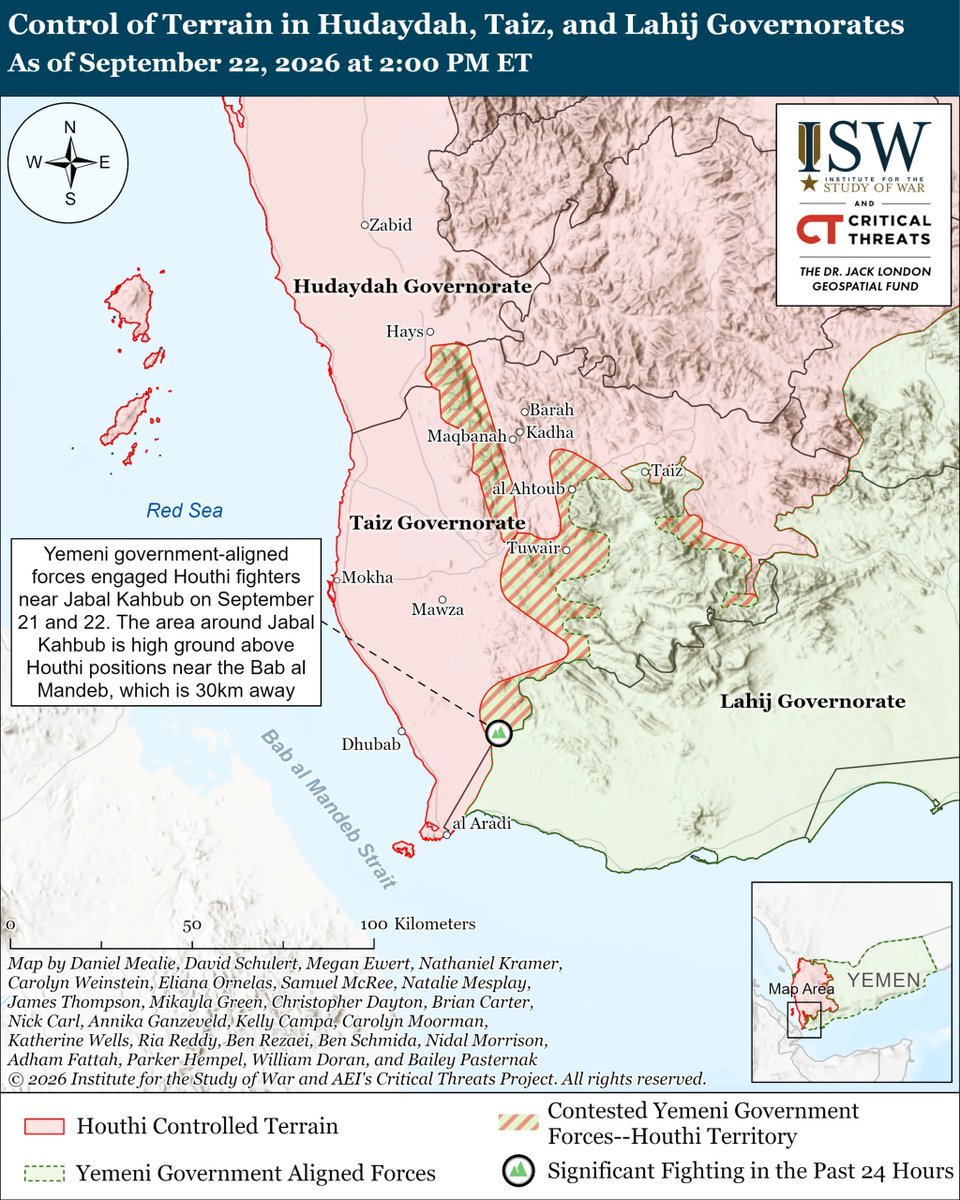
Yemeni government-aligned forces continued to engage Houthi fighters in mountainous areas near Jabal Kahbub on the Lahij-Taiz Governorate border in southwestern Yemen on September 21 and 22. Jabal Kahbub sits approximately 30 kilometers north of Houthi positions by the Bab al Mandeb Strait, which would provide Yemeni government-aligned forces advantageous high ground above Houthi forces along the relatively open Red Sea coastal plain. Homeland Shield Forces and Southern Giants Brigades, which are military factions aligned with the Yemeni government, re-established control of Jabal Kahbub on the Lahij-Taiz Governorate border on September 17 and have since been defending their position.